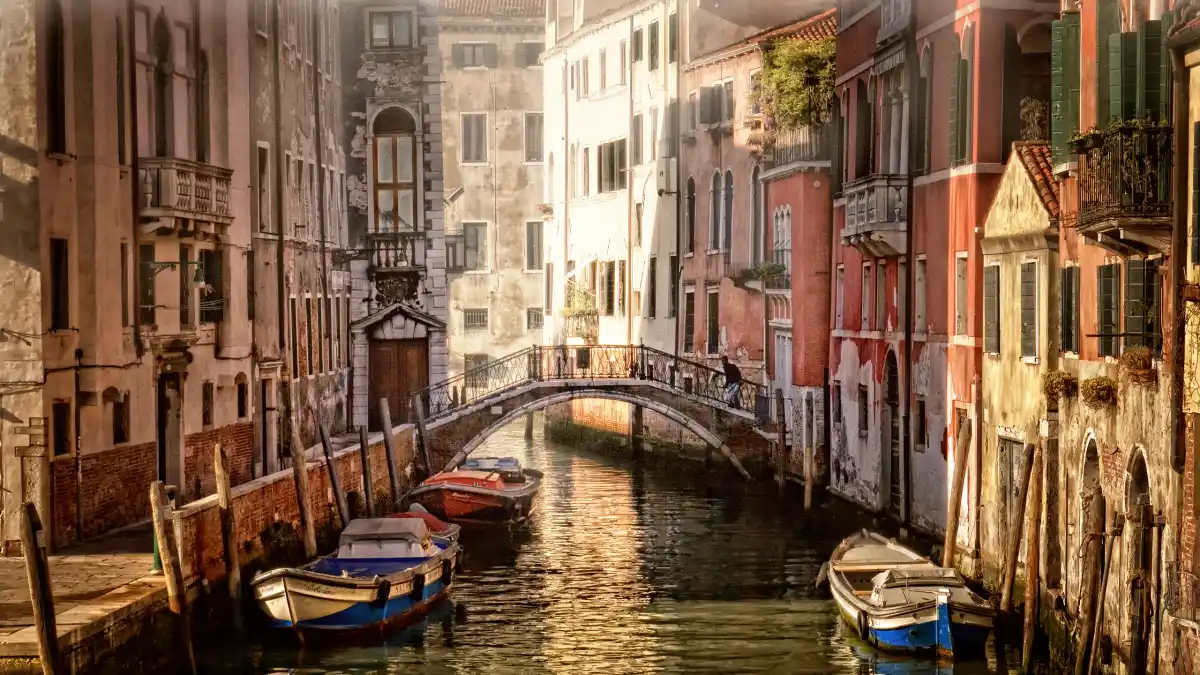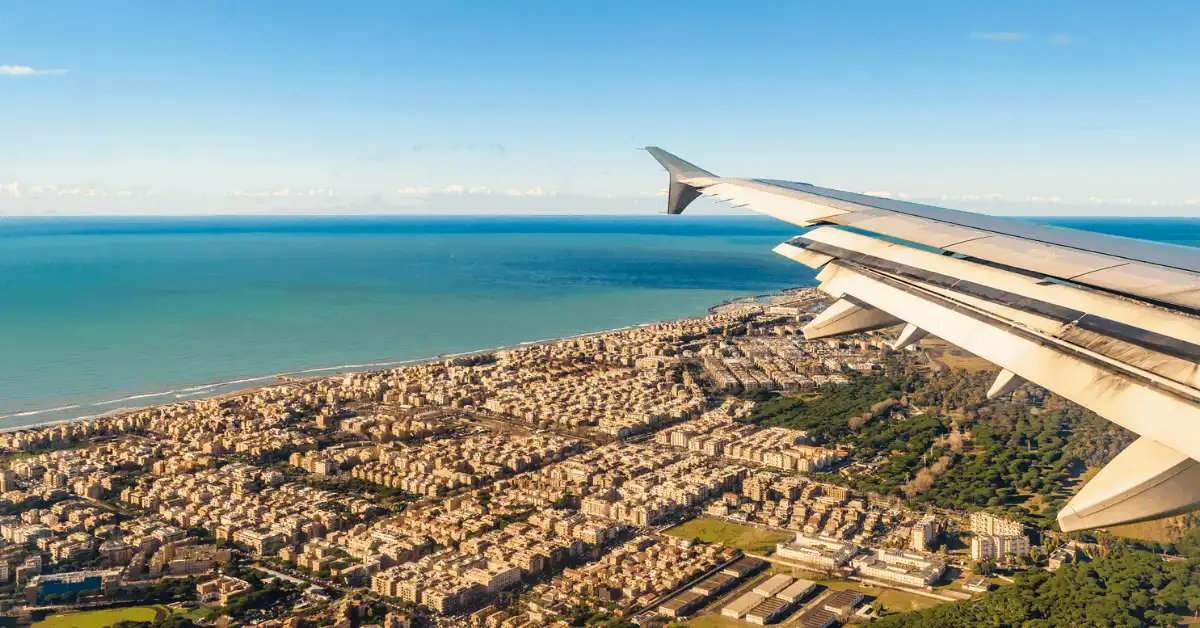
Venice sits within three hours of Slovenia, Croatia and the Austrian Alps. Here is what each journey actually involves, which border you cross, and why there is usually nothing to stop for.

Yes — you can travel by private car from Venice into Slovenia, Croatia or Austria, and because all three are in the Schengen Area there are normally no routine passport controls at the border. You still carry a valid passport or national ID for spot checks, but in practice most crossings involve no stopping at all.
Venice is closer to three foreign countries than most visitors realise. Piran in Slovenia is nearer to Venice than Rome is to Naples. Lake Bled is about three hours away. Yet the public-transport options across these borders are patchy, which is why a direct car journey is often the only sensible way to do it in a day.
This guide covers what each route actually involves — the real driving times, which border crossing you use, what the rules are per country, and the practical details that catch people out.
Planning a cross-border trip from Venice? Send us your destination and travel date and we will confirm a fixed, all-inclusive price before you book.
Get a Fixed Quote →Venice Cross-Border Routes at a Glance
Here are the eight most-requested international journeys from Venice, ordered by distance. Each links to the full route page with its own detail.
| Destination | Country | Distance | Driving time | Border crossing used |
|---|---|---|---|---|
| Piran | Slovenia | ~190 km | ~2 h 15 min | Rabuiese–Škofije |
| Poreč | Croatia | ~230 km | ~2 h 45 min | Italy–Slovenia, then Slovenia–Croatia |
| Ljubljana | Slovenia | ~245 km | ~2 h 30 min | Fernetti–Fernetičí / Sežana |
| Rovinj | Croatia | ~250 km | ~3 hours | Italy–Slovenia, then Slovenia–Croatia |
| Pula | Croatia | ~280 km | ~3 h 15 min | Italy–Slovenia, then Slovenia–Croatia |
| Lake Bled | Slovenia | ~290 km | ~3 hours | Fernetti–Fernetičí / Sežana |
| Innsbruck | Austria | ~380 km | ~4 hours | Brennero–Brenner |
| Salzburg | Austria | ~430 km | ~4 h 30 min | Tarvisio–Arnoldstein |
Distances and driving times are realistic approximations for a private car under normal conditions, measured from central Venice. Journeys from Venice Marco Polo Airport differ slightly.
What Actually Happens at the Border?
For all three countries, usually nothing. Italy, Slovenia, Austria and Croatia are all in the Schengen Area, so there are no routine passport controls on these crossings. Croatia was the most recent to join, in January 2023, which removed what used to be the slowest checkpoint on the Istrian routes.
What this means in practice:
- Carry a valid passport or national ID card. Schengen removes routine checks, not the requirement to be able to identify yourself. Spot checks do happen, particularly on the Austrian routes.
- No customs formalities for personal belongings. Italy, Slovenia, Croatia and Austria are all EU members, so your luggage is not subject to declaration.
- No currency change needed. All four countries use the euro — Croatia adopted it in January 2023, so you no longer need kuna.
- No stopping, in most cases. On a typical crossing the car continues straight through the former checkpoint.
A note on the EU’s new biometric EES checks
If you have read about the EU’s Entry/Exit System, it is worth being clear about where it applies. EES covers the EU’s external border — so for most travellers it happens on arrival at Venice Marco Polo Airport, not on the road afterwards. Driving from Venice into Slovenia, Croatia or Austria is an internal Schengen movement and is not an EES crossing. Our separate guide to biometric border checks at Italian airports explains what to expect when you land.
Tolls, Vignettes and Who Pays for Them
This is the detail that trips up people considering a rental car instead. Each country charges for motorway use differently, and the systems are not interchangeable.
- Slovenia uses an electronic motorway vignette (e-vignette) rather than toll booths. Our vehicles are fully covered.
- Croatia uses conventional motorway tolls, charged by distance.
- Austria requires a motorway vignette, and the Brenner Pass carries a separate toll on top.
- Italy uses the autostrada toll network on the approach from Venice.
On a private transfer all of these are included in the fixed fare you agree beforehand, so there is nothing to buy at a border and no cash needed at a barrier. If you drive yourself, you are responsible for buying the correct vignette before entering each country — being caught without one carries a fine.
Tolls, vignettes, fuel and parking are all included in the price we quote — the figure you confirm is the figure you pay.
See Italy to Slovenia Transfers →Venice to Slovenia: Bled, Ljubljana and the Coast
Slovenia is the most popular cross-border direction from Venice, and the three destinations split neatly by purpose.
- Piran (~190 km, ~2 h 15 min) is the closest foreign destination of all — a Venetian-built harbour town on the Adriatic whose architecture will look oddly familiar after a few days in Venice. It crosses at Rabuiese–Škofije near Trieste.
- Ljubljana (~245 km, ~2 h 30 min) is the capital, and the quickest of the inland runs. The crossing is at Fernetti–Fernetičí / Sežana, above Trieste.
- Lake Bled (~290 km, ~3 hours) is the alpine one — the island church and clifftop castle that fills most people’s image of Slovenia. It uses the same Fernetti crossing, then continues north past Ljubljana. A Venice to Lake Bled transfer is the most requested of these cross-border routes, and it is comfortably a day trip if you set off early.
Bled and Ljubljana are close enough together that visitors often combine them. If that is your plan, mention both when you enquire rather than booking two separate transfers.
Venice to Croatia: The Istrian Peninsula
Croatian Istria is closer to Venice than most of Italy is. Poreč is about 230 km and under three hours; Rovinj about 250 km and three hours; Pula, with its remarkably intact Roman amphitheatre, about 280 km and three and a quarter hours.
All three routes cross two borders — Italy into Slovenia, then Slovenia into Croatia — but since both are Schengen crossings, this adds essentially nothing to the journey time. Before 2023 this was the slowest part of the trip, so older advice you may read online is out of date.
Venice to Austria: Innsbruck and Salzburg
The Austrian routes are the longest and the most scenic. Innsbruck is about 380 km and four hours via the Brennero–Brenner pass, the historic trans-alpine corridor. Salzburg is about 430 km and four and a half hours, crossing at Tarvisio–Arnoldstein in the north-east.
These are genuine half-day journeys, so they suit a one-way relocation between trips rather than a day return. Winter adds a consideration: alpine passes can be affected by snow, and schedules benefit from some flexibility.
Private Car, Train or Bus: An Honest Comparison
A private transfer is not always the right answer, so here is where each option genuinely wins.
- The bus is cheapest. Flixbus and similar operators run Venice–Ljubljana routes for a fraction of a private fare. If you are travelling light, alone and not in a hurry, take it.
- The train is limited here. Cross-border rail from Venice into Slovenia and Croatia is sparse and usually involves changes; it is rarely the fastest option, and for Istria it is impractical.
- A private car wins on door-to-door time, luggage and group size. For two or more people with suitcases, heading to a specific hotel rather than a city-centre bus station, the gap narrows considerably.
- Self-drive adds admin. Many rental agreements restrict or surcharge cross-border travel, and you buy each country’s vignette yourself. Check your rental terms before assuming it is allowed.
Practical Details Worth Knowing
- Venice itself is car-free. A road transfer starts or ends at Piazzale Roma or Tronchetto, the vehicle termini — not at a hotel door inside the historic centre. Allow time to reach them by water or on foot.
- Arriving by air? Transfers can begin directly at Venice Marco Polo Airport, which avoids the trip into the city altogether. There is a dedicated Venice Airport to Ljubljana route for exactly this.
- Tell us about children. Child seats are fitted on request but need to be confirmed in advance, and requirements apply across all four countries.
- Returns are quoted separately. The reverse journeys exist as their own routes, such as Lake Bled back to Venice.
- Allow buffer before a flight. These are long journeys on motorways that can be affected by weather and holiday traffic, particularly the alpine ones.
Tell us your destination, date and passenger numbers, and we will come back with a fixed all-inclusive price covering tolls, vignettes, fuel and parking.
Request a Quote →Related Guides & Transfer Routes
- Venice to Lake Bled Private Transfer
- Venice to Ljubljana Private Transfer
- Venice to Rovinj Private Transfer
- Venice to Pula Private Transfer
- Venice to Salzburg Private Transfer
- Italy to Slovenia Transfers
- Italy to Croatia Transfers
- Italy to Austria Transfers
- Venice Marco Polo Airport Transfers
- Biometric Border Checks at Italian Airports
Frequently Asked Questions
Do I need a passport to travel from Venice to Slovenia or Croatia by car?+−
How long does it take to drive from Venice to Lake Bled?+−
Is there still a border check between Slovenia and Croatia?+−
Do I need to buy a motorway vignette?+−
Which currency do I need for Slovenia, Croatia and Austria?+−
Can the driver collect me from my hotel inside Venice?+−
Can I combine Ljubljana and Lake Bled in one trip?+−
Does the EU’s EES biometric system apply to these road crossings?+−
Ready to Travel Italy Stress-Free?
Book a professional private taxi or airport transfer anywhere in Italy. Fixed prices, NCC-licensed drivers, meet & greet service — 24/7.
Written by
Italy Taxi Service Team
Expert travel writers sharing firsthand knowledge about transportation, airport transfers, and city navigation across Italy.