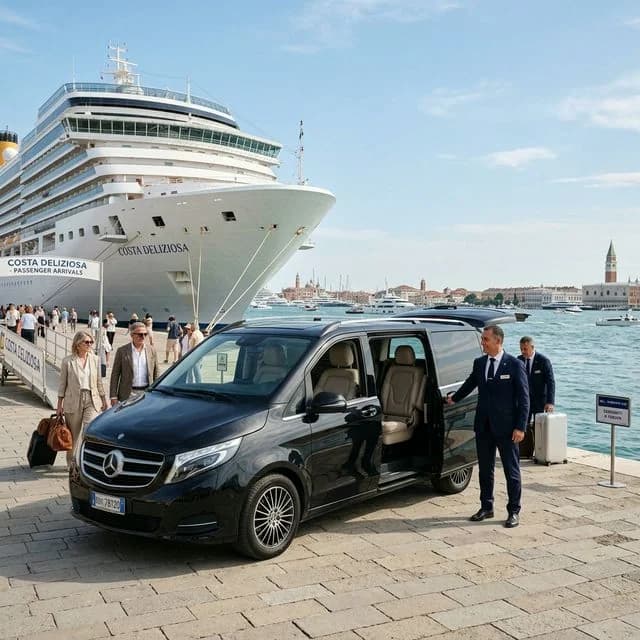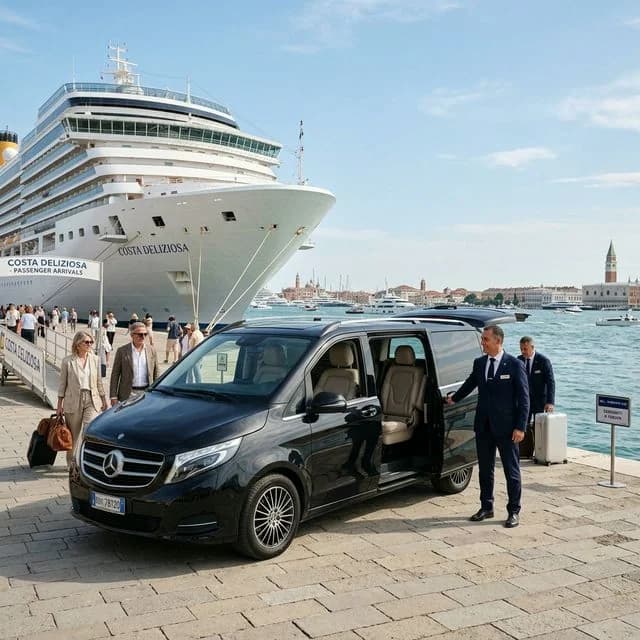
Docking at Civitavecchia? Here's every way to reach Rome and get back to your ship on time — private transfer, train and shuttle compared, with cruiser timing tips.

Civitavecchia is the cruise gateway to Rome — but the port and the Eternal City are not next door. The terminal sits roughly 80 kilometres (50 miles) northwest of central Rome, and getting the journey right is the single most important decision of your cruise day. Choose well and you'll have hours at the Colosseum and the Vatican; choose badly and you'll spend your day stressing about making it back before the ship sails. This guide compares every realistic option from Civitavecchia to Rome, with honest pros, cons and timing advice for cruise passengers.
Cruising into Civitavecchia? Reserve a private ship-to-door transfer that tracks your arrival and waits if the ship is delayed — no queues, no stress, fixed price.
Book Your Private Transfer →Civitavecchia to Rome: Distance & Drive Time
By road, Civitavecchia to central Rome is about 75–90 minutes each way depending on traffic and your exact destination. The Vatican and St Peter's are on the nearer (northwest) side of the city, while the Colosseum and Roman Forum are slightly further. Building in a realistic round-trip plus sightseeing means you should treat the journey as a full day, not a quick hop.
Here is how the main options compare for a typical cruise day:
| Option | Door-to-door time | Approx. cost | Best for |
|---|---|---|---|
| Private transfer | 75–90 min direct | €€€ (per car) | Families, groups, peace of mind |
| Train (Regionale) | 2–2.5 hrs total | € (per person) | Solo budget travellers |
| Shared shuttle | 2+ hrs (multiple stops) | €€ (per person) | Couples on a budget |
Option 1: Private Transfer (Ship-to-Door)
For cruise passengers, a private transfer is the lowest-risk way to see Rome. A professional driver meets you at the port gate, drives you directly to your chosen sights, and is contracted to return you to the ship with a safe buffer. Because cruise lines treat independent travellers strictly on sail-away timing, that reliability is worth a great deal.
The advantages are clear: no queues, no navigation, luggage-free comfort, air conditioning in the Roman heat, and a fixed all-inclusive price agreed in advance. A good operator monitors your ship's actual arrival — so if you berth late, your driver is still there. Our cruise port transfer service is built specifically around this timing pressure, and many cruisers pair it with a private Rome tour so the same driver waits between stops.
Option 2: The Train via Roma Termini / San Pietro
Italy's regional trains connect Civitavecchia station to Rome's main hubs. A regional (Regionale) service takes around 50–80 minutes to Roma San Pietro or Roma Termini. The train itself is inexpensive — but the door-to-door reality is longer than the headline number.
First you must walk or take the port shuttle from your ship to the port gate (the terminal is large), then walk roughly 10–15 minutes to Civitavecchia station, buy and validate tickets, and wait for the service. At the Rome end you arrive at a station, not your sight, so add metro or taxi time. Trains can also be crowded and are occasionally affected by strikes. For budget-conscious solo travellers it works; for families juggling timing, it adds friction.
Option 3: Shared Shuttle Bus
Shared shuttles sit between the two — cheaper than a private car, more direct than the train. The trade-off is waiting for the vehicle to fill and, sometimes, multiple drop-off points. You're also tied to the shuttle's fixed return time, which can cut your sightseeing short or leave you waiting around. For couples watching costs who don't mind less flexibility, it's a reasonable middle path.
Connecting to Fiumicino or Ciampino Afterwards
Many cruisers end their voyage at Civitavecchia and fly home the same or next day. A private transfer can take you port-to-airport directly — Civitavecchia to Rome Fiumicino is around 60–75 minutes. If you're overnighting first, see our guide on the best hotels near Rome Fiumicino Airport. Pre-booking matters here: post-cruise mornings are chaotic, with thousands of passengers disembarking at once.
Cruise-Day Timing Tips
- Know your all-aboard time, not just the departure time — it's usually 30–60 minutes earlier.
- Build a buffer of at least 90 minutes between your planned return and all-aboard.
- Independent travellers are responsible for making the ship. A transfer that tracks your vessel removes most of the risk.
- Carry a little euro cash for incidentals — see our guide to paying for taxis in Italy.
- Start early. Rome rewards an 8am start far more than a 10am one.
However you travel, treat the clock as your master on a cruise day. Rome is more than worth the effort — just give yourself the margin to enjoy it. If you'd rather not gamble on trains and timetables, a pre-booked private transfer from Rome specialists turns a logistically tricky day into a relaxed one. Travellers heading south toward Naples on a longer itinerary can arrange the same door-to-door service.
What to See in Rome on a Cruise Day
With only a few hours ashore, the secret is to resist trying to "see all of Rome" and instead pick a focused route. The city's two headline clusters are conveniently on opposite sides of the historic centre, so most cruisers choose one as their anchor and add a couple of nearby sights.
The Vatican Cluster
St Peter's Basilica, St Peter's Square and the Vatican Museums (home to the Sistine Chapel) sit on the nearer, northwest side of the city — the side closest to Civitavecchia. If the Vatican is your priority, you'll save 15–20 minutes of cross-city driving versus starting at the Colosseum. Book Vatican Museum tickets online in advance; the standby queue can swallow well over an hour in peak season, which is time a cruiser simply cannot spare.
The Ancient Rome Cluster
The Colosseum, Roman Forum and Palatine Hill form a single walkable archaeological zone, with the Trevi Fountain and Pantheon a short distance north. A reserved-entry Colosseum ticket is essential. From here it's an easy stroll to throw a coin in the Trevi Fountain and stand under the Pantheon's dome — three world-famous sights in a compact loop.
A Realistic One-Day Itinerary
A proven cruise-day plan looks like this: arrive in Rome by around 9:30am, spend the morning at the Vatican, have a quick Roman lunch, then transfer across to the Colosseum and Trevi/Pantheon area for the early afternoon, and start back to the port by roughly 3:30–4:00pm. With a private driver shuttling you between the two clusters, this is comfortable; relying on public transport between them eats into your margin.
Ship Excursion vs Independent Transfer
Cruise lines heavily promote their own Rome excursions, and their main selling point is the guarantee that the ship won't leave without you. That peace of mind is real — but it comes at a premium price, on a large coach, on a fixed group schedule that often includes a long lunch stop you didn't choose. An independent private transfer typically costs less for a family, moves faster, and lets you set your own pace and priorities. The one rule that makes independent travel just as safe: book an operator who tracks your ship and contractually guarantees a timed return, exactly as our cruise port transfer service does. Pairing the transfer with a licensed guide via our private tours gets you skip-the-line context without the coach.
Common Mistakes Cruisers Make
- Underestimating the distance. Civitavecchia is not a suburb of Rome — it's an 80 km drive. Plan for a full day, not a quick visit.
- Forgetting the ship-to-gate shuttle. Your driver waits at the port gate, not your pier, so add that short shuttle ride to your timing both ways.
- Booking unreserved museum tickets. Standby lines at the Vatican and Colosseum can cost you an hour you don't have.
- Cutting the return buffer too fine. Roman traffic is unpredictable; leave at least a 90-minute cushion before all-aboard.
- Relying on finding a taxi at the gate. On busy port days, taxis can be scarce — pre-book your transfer.
A Local Insight
Most independent cruisers funnel into the Colosseum and Vatican between 10am and noon, which is exactly when those sites are busiest. If your ship berths early, flip the script: go to the Colosseum or Vatican first thing, then enjoy the squares and fountains as the morning coaches arrive. An early start genuinely transforms a Rome cruise day from a stressful sprint into a memorable highlight — and a driver who collects you the moment the gangway opens is the easiest way to seize that head start.
Understanding the Costs
For cruise passengers, the cost comparison isn't just about the headline fare — it's about value per hour ashore and the risk of a missed ship. A private transfer is priced per vehicle, so for a couple it's pricier than the train, but for a family or group of four to six it often works out similar or cheaper per person, with vastly more comfort and flexibility. Factor in what each option really costs once you add the hidden extras:
- Train: cheap ticket, but add the walk to the station, possible taxi at the Rome end, and the time cost of connections.
- Shared shuttle: mid-priced per person, but fixed return times can shorten your day.
- Private transfer: one fixed fare covering the whole group, door-to-door, with a guaranteed timed return — the lowest-risk choice on a cruise day.
Always confirm what's included when booking: reputable operators quote an all-inclusive price with no surprise supplements for luggage or waiting time. Because demand spikes on busy port days, reserve your Civitavecchia transfer well ahead, especially in the May–September cruise season.
Frequently Asked Questions
How far is Civitavecchia from Rome?
Civitavecchia port is about 80 km (50 miles) northwest of central Rome, roughly a 75–90 minute drive each way depending on traffic and your exact destination in the city.
How much is a taxi or transfer from Civitavecchia to Rome?
A private transfer is priced per vehicle (not per person) as a fixed, all-inclusive fare agreed in advance, which makes it especially good value for families and groups. The train is cheaper per person but adds walking, connections and waiting time.
Is there a train from Civitavecchia to Rome?
Yes. Regional trains run from Civitavecchia station to Roma San Pietro and Roma Termini in roughly 50–80 minutes. Remember to add the time to reach the station from your ship and to reach your sight from the Rome terminus.
Will a private driver wait if my ship arrives late?
A cruise-focused operator monitors your ship's actual arrival and adjusts the pickup, so a late berth does not mean a missed transfer. This is one of the main reasons cruisers choose a private transfer over the train.
Can I visit Rome in one day from Civitavecchia?
Absolutely — thousands do. With an early start and a direct transfer you can comfortably see the Vatican and the Colosseum area. Keep a 90-minute buffer before all-aboard and prioritise two or three highlights rather than rushing the whole city.
Frequently Asked Questions
How far is Civitavecchia from Rome?+−
How much is a taxi or transfer from Civitavecchia to Rome?+−
Is there a train from Civitavecchia to Rome?+−
Will a private driver wait if my ship arrives late?+−
Can I visit Rome in one day from Civitavecchia?+−
Ready to Travel Italy Stress-Free?
Book a professional private taxi or airport transfer anywhere in Italy. Fixed prices, NCC-licensed drivers, meet & greet service — 24/7.

Written by
Italy Taxi Service Team
Expert travel writers sharing firsthand knowledge about transportation, airport transfers, and city navigation across Italy.