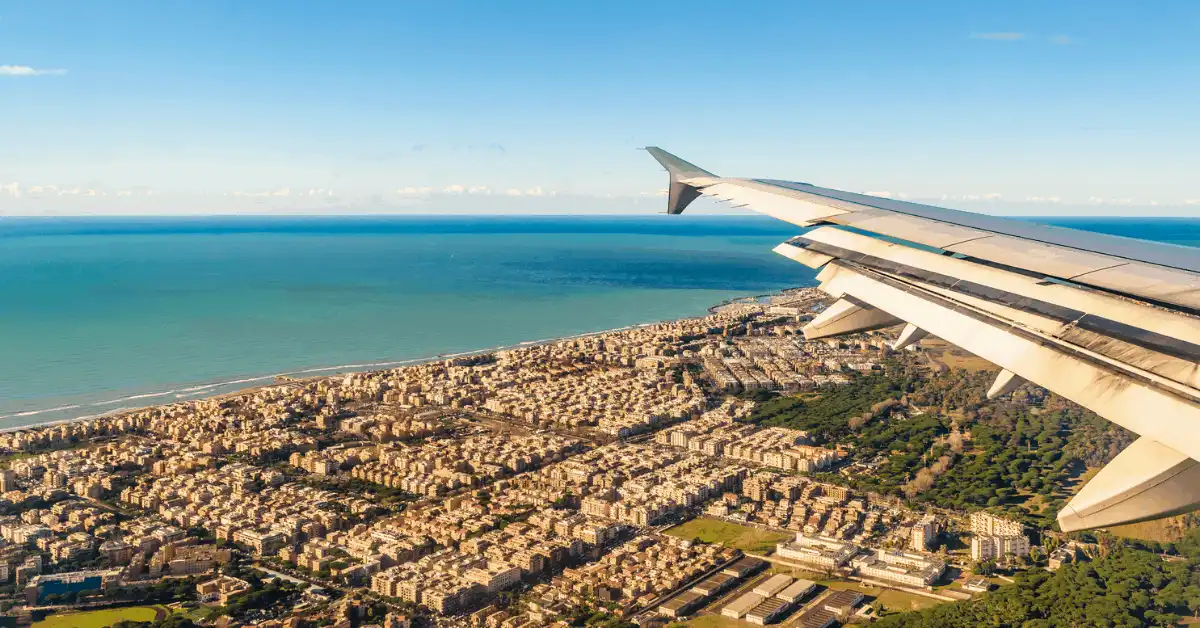
Landing at Rome Fiumicino for the first time? Here's exactly what to expect after you step off the plane — and how to get into the city smoothly.

Rome Fiumicino (Leonardo da Vinci, code FCO) is Italy's largest airport and, for millions, the first taste of the country. After a long flight, knowing exactly what happens between the jet bridge and the city makes all the difference. This first-time arrival guide to Rome Fiumicino walks you through every step — passport control, baggage, money, connectivity — and lays out the best ways into central Rome so you arrive relaxed.
Don't want to navigate a tired-and-jet-lagged arrival alone? A private transfer means a driver is waiting in arrivals with your name — straight to your hotel, fixed price.
Book a Fiumicino Transfer →Step 1: From the Gate to Passport Control
Fiumicino has multiple terminals (T1, T3 and the international T5 area for some carriers). After disembarking, follow the clear "Arrivi / Arrivals" and "Controllo Passaporti / Passport Control" signs. The walk can be long — Fiumicino is big — so allow time, especially if you have a connection.
Step 2: Passport Control & Customs
If you're arriving from outside the Schengen Area, you'll pass through passport control. EU/EEA/Swiss passport holders and many others can use the e-gates; check the signs. From within Schengen, there's typically no passport check. After collecting bags you'll pass through customs — green channel ("nothing to declare") for most tourists. Queues vary; mornings and the summer peak are busiest. For more on the wider process, see our guide to navigating Italian airports.
Step 3: Baggage Claim
Screens display your flight and belt number. If a bag doesn't appear, report it at your airline's baggage desk before leaving the hall — this is essential for any insurance claim. Free trolleys are usually available in the baggage area.
Step 4: ATMs, Money & SIM Cards
You'll find ATMs (look for "Bancomat") in the arrivals area — withdraw a modest amount of euro for incidentals. Avoid airport currency-exchange desks, which offer poor rates. Italy is increasingly card-friendly, but a little cash is handy; our money and currency guide explains more. If you want a local SIM or eSIM, provider kiosks are present, though buying online before travel is often cheaper.
Step 5: Getting into Central Rome
This is the decision that shapes your first hours. Your main options:
| Option | Time to centre | Notes |
|---|---|---|
| Private transfer | ~45–60 min | Door-to-door, fixed price, driver waiting |
| Leonardo Express train | ~32 min to Termini | Then metro/taxi to your hotel |
| Official taxi | ~45–60 min | Fixed €50 flat fare to centre (inside Aurelian walls) |
| Bus/shuttle | 60+ min | Cheapest, slowest, luggage handling |
The Leonardo Express is fast to Roma Termini but leaves you to reach your hotel from the station. An official white taxi charges a fixed €50 flat fare to the historic centre — make sure it's a licensed taxi, not a tout. For the smoothest first arrival, a pre-booked private airport transfer means no queue and no navigation: a professional driver takes you straight to your door. Compare every route in detail in our companion guide to getting from Fiumicino Airport to Rome city centre.
Travelling Onward from Fiumicino
Many visitors don't stay in Rome at all — they head to Florence, the coast or a cruise at Civitavecchia. A private transfer can take you city-to-city or port-to-door directly, which is far less stressful than dragging luggage across train stations. If you're connecting to a cruise, see our cruise port transfer service.
First-Timer Tips for Fiumicino
- Only use official white taxis or a pre-booked transfer — ignore anyone approaching you inside the terminal offering a ride.
- Have your hotel address written down, including whether it's inside a ZTL zone.
- Download offline maps before you land.
- Keep your passport handy until you've cleared all checks.
- Pre-book your ride if arriving late or with children — see arrival tips for Rome.
Fiumicino is well signposted and easier than its size suggests once you know the flow. Clear the checks, grab some euro, and step out to a driver who's already waiting — and your Roman holiday begins the moment you land. Arrange your arrival transfer here.
Terminal Facilities & Layout
Fiumicino is consistently rated one of Europe's better large airports, and the arrivals experience reflects that. Once through customs you'll emerge into a spacious arrivals hall with cafés, pharmacies, ATMs, car-hire desks, tourist information and SIM kiosks. There's free Wi-Fi throughout, and clear bilingual (Italian/English) signage. Restrooms and baby-changing facilities are plentiful. If you need to wait for a later connection or a family member on another flight, there's ample seating and food options landside.
Finding Your Way Between Terminals
The terminals (T1, T3 and the T5 satellite used by some long-haul carriers) are connected, but T5 is reached by a shuttle bus, so allow extra time if you're moving between them. For arrivals, simply follow the exit flow; for departures later in your trip, double-check your terminal on your boarding pass, as it determines check-in location.
If You Have a Connecting Flight
Connecting at Fiumicino requires a little planning. If your bags are checked through to the final destination, you'll follow "Transfer / Connecting Flights" signage and may need to clear passport control if you're entering or leaving the Schengen Area. If you must re-check bags, allow a comfortable layover — a minimum of around 90 minutes for domestic/Schengen connections and longer for international transfers. When in doubt, ask staff at the transfer desk; Fiumicino's signage is good but a long walk between gates can eat into a tight connection.
Avoiding Common Arrival Scams
Like any major airport, Fiumicino attracts a few opportunists targeting tired arrivals. Protect yourself with a few simple habits:
- Ignore anyone approaching you inside the terminal offering a taxi or "limo". Licensed taxis wait at the official rank outside; legitimate private drivers hold a name board and have a pre-arranged booking.
- Use only the white official taxis with the €50 flat-fare sticker for the city centre, or a pre-booked transfer.
- Withdraw cash from bank ATMs, not standalone "currency" machines or exchange desks with poor rates.
- Keep bags zipped and within sight in the busy arrivals hall.
Returning to Fiumicino for Your Flight Home
At the end of your trip, the calculus reverses. For an international departure, aim to arrive at Fiumicino about three hours ahead; for domestic or Schengen flights, two hours is usually enough. Factor in the transfer time from your accommodation — central Rome to FCO is 45–60 minutes, and early-morning starts are common. A pre-booked departure transfer that monitors traffic takes the anxiety out of an early flight; many travellers staying near the airport the night before an early departure use the airport-area hotels covered in our guide.
A Local Insight
The most common first-timer mistake at Fiumicino isn't getting lost — the airport is well signed — it's the moment of decision fatigue in the arrivals hall, jet-lagged, scanning for the best way into the city while touts circle. Removing that decision in advance is the single biggest upgrade to your arrival. Whether you choose the Leonardo Express, an official taxi or a private transfer, decide before you fly so that stepping out of customs means walking straight to your transport, not negotiating it.
SIM Cards, Luggage Storage & Other Services
Fiumicino offers the full range of traveller services, and knowing where they are saves time on arrival. SIM cards and eSIMs: provider kiosks (TIM, Vodafone, WindTre) sell tourist data packages, though buying an eSIM online before you fly is usually cheaper and means you land already connected. Luggage storage: left-luggage facilities let you stash bags if you have a long layover or want to sightsee before a late flight. Pharmacies and medical: a 24-hour pharmacy and first-aid points are on site. Lounges: several pay-per-use lounges welcome travellers regardless of airline or class, ideal for a comfortable wait.
Travelling with Reduced Mobility or Children
Fiumicino is fully step-free with lifts, ramps and accessible restrooms, and the airport provides special-assistance services if requested through your airline in advance — staff can meet you at the aircraft and help all the way to your transport. Families will find baby-changing facilities, and the walking distances, while long, are smooth. For anyone who finds a big airport tiring, a pre-booked private transfer with meet-and-greet is the gentlest option: the driver waits at arrivals, helps with luggage, and takes you straight to the door in Rome — no rank queue, no platform changes. Families needing child seats should request them when booking, and anyone travelling with a wheelchair should read our guide to wheelchair-accessible airport transfers in Italy first, because suitable vehicles have to be arranged in advance.
A Quick Word on Rome's Second Airport, Ciampino
While Fiumicino is Rome's main gateway, many low-cost carriers (especially Ryanair and Wizz Air) use the smaller Ciampino Airport (CIA), southeast of the city. If you're flying low-cost, double-check which airport you land at — they're on opposite sides of Rome, and the difference matters for your transfer. Ciampino is more compact and quicker to clear, but has fewer facilities and no train link of its own; the official taxi flat fare into central Rome is lower than Fiumicino's, and a private transfer takes around 30–40 minutes. The arrival principles are identical: clear passport control and baggage, withdraw a little euro, and head straight to a pre-arranged ride rather than negotiating with touts. Whichever Rome airport you use, the smoothest arrival is the one you've planned before takeoff.
Frequently Asked Questions
How long does it take to get through Rome Fiumicino on arrival?
From landing to leaving the terminal usually takes 30–60 minutes, depending on passport queues and baggage. Allow extra during summer mornings, the busiest period, and if you have a connecting flight.
How much is a taxi from Fiumicino to central Rome?
Official white taxis charge a fixed €50 flat fare to the historic centre (inside the Aurelian walls). Always use a licensed taxi or a pre-booked transfer, and decline anyone soliciting rides inside the terminal.
What's the fastest way into Rome from Fiumicino?
The Leonardo Express train reaches Roma Termini in about 32 minutes, but you then continue to your hotel. A private transfer is door-to-door in 45–60 minutes with no onward connection needed.
Should I get cash or use cards at the airport?
Withdraw a small amount of euro from an ATM ("Bancomat") for incidentals and avoid the exchange desks' poor rates. Italy widely accepts cards, but a little cash is useful for small purchases and tips.
Can I arrange a driver to be waiting when I land?
Yes. A pre-booked private transfer includes meet-and-greet: your driver tracks the flight and waits in arrivals with a name board, then takes you directly to your hotel — ideal for a first, jet-lagged arrival.
Frequently Asked Questions
How long does it take to get through Rome Fiumicino on arrival?+−
How much is a taxi from Fiumicino to central Rome?+−
What's the fastest way into Rome from Fiumicino?+−
Should I get cash or use cards at the airport?+−
Can I arrange a driver to be waiting when I land?+−
Ready to Travel Italy Stress-Free?
Book a professional private taxi or airport transfer anywhere in Italy. Fixed prices, NCC-licensed drivers, meet & greet service — 24/7.

Written by
Italy Taxi Service Team
Expert travel writers sharing firsthand knowledge about transportation, airport transfers, and city navigation across Italy.