Cinque Terre is car-free and a little tricky to reach. This complete transport guide covers trains, ferries, the Cinque Terre Card, and transfers from every direction.

The five cliffside villages of Cinque Terre — Monterosso, Vernazza, Corniglia, Manarola and Riomaggiore — are among Italy's most photographed places, and among its most car-unfriendly. The villages are largely closed to traffic, connected by a clever local railway, scenic ferries and walking trails. Understanding how it all fits together is the key to a smooth visit. This Cinque Terre transportation guide explains how to reach the area from anywhere in Italy and how to move between the villages once you're there.
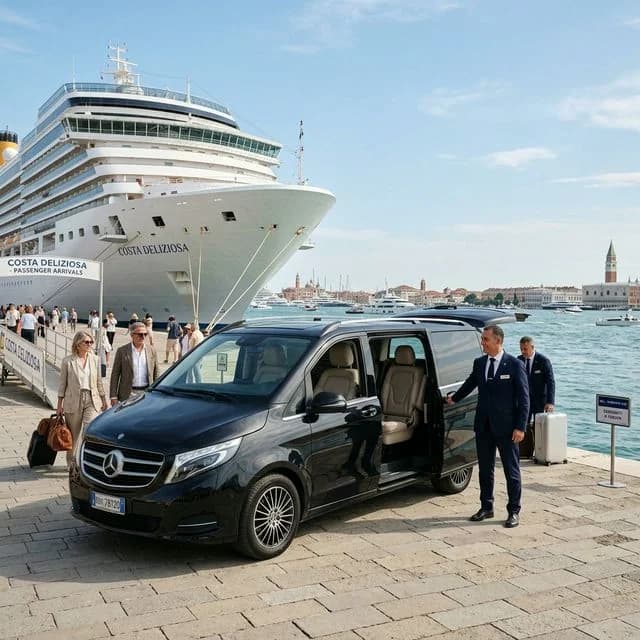
Coming from Florence, Pisa or a cruise port? A private transfer to the Cinque Terre gateway saves hours over multiple train changes with luggage.
Book a Cinque Terre Transfer →How Cinque Terre Transport Works
The golden rule: you cannot drive into the villages. The practical hub is La Spezia (to the south) and, to a lesser extent, Levanto (to the north). From either, the local Cinque Terre Express train links all five villages in minutes. So almost every journey ends with the same final step — reach La Spezia or Levanto, then ride the local train.
Getting to Cinque Terre
From Florence
Florence is a popular launch point. By train it's typically 2.5–3 hours with a change (often at Pisa or La Spezia). A private transfer to La Spezia is faster and door-to-door — ideal for groups or anyone who'd rather not juggle connections — and you then hop on the local train. See our Florence guide and Florence private driver service.
From Pisa & Milan
Pisa is the closest major airport — about 1.5 hours by road to La Spezia, making Pisa Airport the natural arrival point. From Milan it's roughly 3 hours; trains run via Genoa or La Spezia. Genoa Airport is another handy gateway to the north.
From the Cruise Ports
Cruisers dock at La Spezia (right on the doorstep) or sometimes Livorno. From La Spezia you're minutes from the local train; from Livorno it's about 75 minutes by road. Our cruise port transfers handle both, and our Livorno shore excursions guide has more.
The Cinque Terre Card
The Cinque Terre Card is the pass most visitors should buy. Two versions exist:
| Card | Includes | Best for |
|---|---|---|
| Trekking Card | Trail access, buses, Wi-Fi | Walkers using their own train tickets |
| Train Card | Above + unlimited Cinque Terre Express trains | Most visitors hopping between villages |
The Train Card usually pays for itself quickly if you plan to visit several villages, since individual hops add up. Buy it at station ticket offices or online.
Ferries & Trails
The ferry is the most beautiful way to travel between four of the villages (Corniglia has no harbour), offering postcard views of the cliffs from the water. Services run roughly April–October, weather permitting. The famous walking trails connect the villages too, though some sections close after landslides — always check current status. For most people, the winning formula is train to get around quickly, ferry once for the views, and a short signature walk.
Getting Around the Villages
- Cinque Terre Express train — the backbone; villages are 2–4 minutes apart.
- Ferry — scenic hops (skip Corniglia, which is up on a cliff).
- Trails — for the famous coastal walks (check closures and the trail card).
- On foot — the villages themselves are tiny and pedestrianised.
Cinque Terre Travel Tips
- Arrive early or stay overnight — day-trip crowds peak midday.
- Wear proper shoes — lots of steps and uneven paths, especially Corniglia.
- Validate paper train tickets before boarding to avoid fines.
- Reach La Spezia by private transfer if coming from Rome, Florence or a port — then switch to the local train.
- Check trail and ferry status the day before.
Cinque Terre looks complicated on a map but follows a simple logic: get to the gateway, ride the little train, take the ferry once for the magic. Sort the long leg with a comfortable transfer and you'll spend your energy on the villages, not the connections. Arrange your Cinque Terre transfer here.
The Five Villages & the Best Order to Visit
Each village has its own character, and a little knowledge helps you prioritise if you're short on time:
- Monterosso al Mare — the largest, with the only real sandy beach; good for a swim and a relaxed lunch.
- Vernazza — widely considered the prettiest, with a natural harbour and a photogenic piazza.
- Corniglia — the only village not at sea level, perched on a clifftop reached by a long stairway or shuttle; the quietest.
- Manarola — famous for its sunset views and clifftop vineyards; arguably the best photo spot.
- Riomaggiore — the southern gateway nearest La Spezia, with a tumble of colourful houses down to the water.
A popular approach is to start at the far end (Monterosso or Riomaggiore) and work back toward your transport, saving Manarola for the golden evening light.
Walking the Trails in Detail
The Cinque Terre is laced with hiking paths, and walking even one section between villages is a highlight. The famous coastal Sentiero Azzurro (Blue Trail) links the villages, though sections — notably the easy "Via dell'Amore" between Riomaggiore and Manarola — open and close depending on maintenance and landslide repairs. Higher trails offer spectacular views and fewer crowds but demand more fitness and proper footwear. Always check current trail status the day before (status changes seasonally), carry water, and note that the paid trails require the Cinque Terre Card or a trail ticket, with rangers checking at access points.
Where to Base Yourself
While many visit on a day trip, staying overnight transforms the experience — you get the villages in the soft morning and evening light, long after the day-trippers have left. Monterosso suits those wanting a beach and more hotel choice; Vernazza and Manarola are the most atmospheric but smaller. La Spezia, just outside, offers the widest accommodation and the easiest transport links, making it a practical base if the villages are booked up. From any of them, the local train keeps everything minutes apart.
Seasonal & Crowd Notes
Cinque Terre is busiest from June to September and during cruise-ship days, when narrow lanes can become congested by late morning. May, early June and late September hit the sweet spot of warm weather and thinner crowds. Winter is quiet and many restaurants and ferries reduce service. Whatever the season, the golden rule holds: arrive early or stay overnight to enjoy the villages at their calmest.
Accessibility & Mobility
The villages are steep, stepped and cobbled, which makes them challenging for travellers with limited mobility or heavy strollers. Corniglia in particular involves a long climb. The train and ferries are the most accessible ways to move around, and a private transfer to La Spezia removes the hardest logistical leg. If mobility is a concern, base yourself near a station and use the train liberally rather than attempting the trails.
A Local Insight
The biggest mistake visitors make is treating Cinque Terre as a quick photo stop and trying to "do all five" in two hours. The villages reward slowing down — a glass of local Sciacchetrà wine on a terrace, a focaccia from a village bakery, one ferry ride at sunset. Reach the gateway efficiently with a transfer from Florence, Milan or a cruise port, then let the little train and your feet set an unhurried pace. That's how the five villages go from a checklist to a memory.
What to Eat: Local Specialties
Cinque Terre's food is a highlight in itself, shaped by the sea and the steep vineyard terraces. Look out for: fresh anchovies from Monterosso, served marinated or fried; trofie al pesto, as this corner of Liguria is the birthplace of pesto; fried seafood in a paper cone ("frittura"), perfect for eating on a harbour wall; and focaccia, the regional staple. Wash it down with the crisp local white wine or, for a treat, the sweet Sciacchetrà dessert wine made from grapes grown on those cliffside terraces. Eating well here is easy and inexpensive if you favour the village bakeries and seafood counters over the most tourist-facing terraces.
Costs: Cards, Trains & Transfers
Budgeting for Cinque Terre comes down to three things: the Cinque Terre Card (the Train Card version pays for itself with a few village hops), ferry tickets (priced per journey, a little more than the train but worth it once for the views), and how you reach the area. The long leg — from Florence, Milan or a cruise port to La Spezia — is where a private transfer adds the most value for groups, saving multiple changes with luggage. Carry some cash, as smaller village vendors don't always take cards; our payments guide has more.
Day Trip vs Overnight Stay
Most visitors experience Cinque Terre as a day trip — and it works well, especially with an early start. But if your schedule allows even one night, the reward is significant: you'll see the villages emptied of day-trippers in the golden evening and early morning, when they return to being the quiet fishing communities they once were. An overnight also takes the pressure off, letting you walk a trail, linger over a seafood dinner, and watch the sunset from Manarola without racing for a train. If you can only manage a day, prioritise arriving early via a direct transfer to La Spezia, pick two or three villages rather than all five, and take one ferry for the views. Either way, sorting the long inbound leg in advance — from Florence, Milan or a cruise port — is what frees your time for the villages themselves.
Frequently Asked Questions
Can you drive into Cinque Terre?
No. The villages are essentially closed to outside traffic. You drive or train to La Spezia or Levanto and then use the local Cinque Terre Express train, ferries or trails to move between the five villages.
What's the best way to get to Cinque Terre from Florence?
By train it's about 2.5–3 hours with a change. A private transfer to La Spezia is faster and door-to-door, after which you hop on the local train — convenient for groups or travellers with luggage.
Is the Cinque Terre Card worth buying?
For most visitors, yes. The Train Card includes unlimited Cinque Terre Express trips, which quickly pays off if you're hopping between villages, plus trail access and other perks.
How do I get around between the villages?
The Cinque Terre Express train is fastest, linking villages in 2–4 minutes. Ferries offer the best views (except Corniglia, which has no harbour), and walking trails connect them when open.
Which airport is closest to Cinque Terre?
Pisa is the nearest major airport, about 1.5 hours by road to La Spezia. Genoa is another good gateway to the north. From either, a private transfer to La Spezia plus the local train is the smoothest route.
Related Guides & Services
Frequently Asked Questions
Can you drive into Cinque Terre?+−
What's the best way to get to Cinque Terre from Florence?+−
Is the Cinque Terre Card worth buying?+−
How do I get around between the villages?+−
Which airport is closest to Cinque Terre?+−
Ready to Travel Italy Stress-Free?
Book a professional private taxi or airport transfer anywhere in Italy. Fixed prices, NCC-licensed drivers, meet & greet service — 24/7.

Written by
Italy Taxi Service Team
Expert travel writers sharing firsthand knowledge about transportation, airport transfers, and city navigation across Italy.