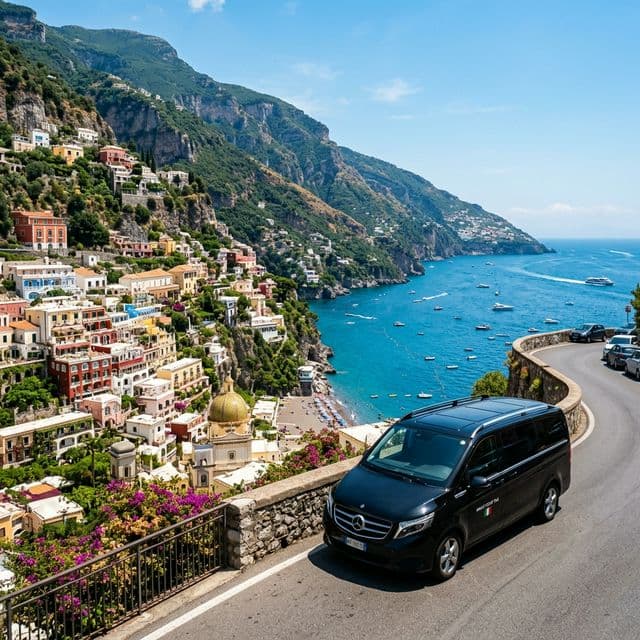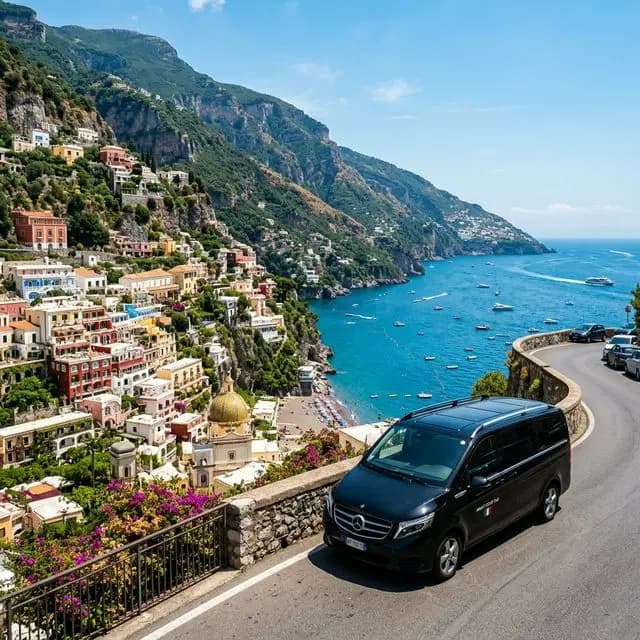
One narrow road, vertical towns and a summer that gridlocks. An honest guide to how the Amalfi Coast actually works: which town suits you, the SS163 reality, the stairs, ferries, and when to go.
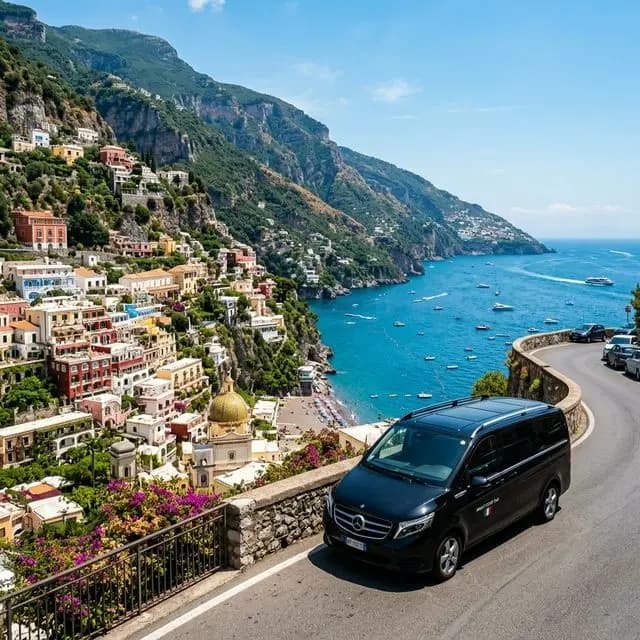
The Amalfi Coast is a UNESCO World Heritage stretch of cliff on the southern side of the Sorrentine Peninsula, in Campania, and it is served by exactly one coastal road: the SS163, the Amalfitana. Almost everything that delights and frustrates visitors follows from that single fact.
So the short answer is this. Choose the town that matches how you actually travel, come outside July and August if you possibly can, use the ferry as your default in summer, and do not assume a hire car will make life easier here. It usually makes it harder.
What the coast actually is
Picture a mountain range that falls straight into the sea. The towns are not spread across a plain; they are wedged into ravines and terraced onto cliffs wherever a stream once cut a gap. There is no coastal promenade linking them, no ring road, no bypass. The Amalfitana threads along the rock face, sometimes hundreds of metres above the water, and every vehicle that wants to move along the coast uses it.
That geography is why the views are extraordinary. It is also why a distance that looks like twenty minutes on a map can swallow an hour and a half of your afternoon. Understanding this before you book anything is the single most useful piece of planning you can do.
The towns and who they suit
People talk about "the Amalfi Coast" as though it were one destination. It is really a chain of very different villages, and choosing badly is the most common mistake first-timers make. A honeymooning couple and a family with a toddler and a stroller do not want the same town.
| Town | Vibe | Best for | The catch |
|---|---|---|---|
| Positano | Vertical, photogenic, expensive, buzzing | Couples, photographers, people who want the postcard | Built into a near-vertical cliff; steps everywhere; crowded and pricey |
| Amalfi | Compact old town, working harbour, striped cathedral | First-timers, ferry hopping, easy walking | Flatter but busiest at midday when the day trips land |
| Ravello | Quiet, high, gardens and music | Slower travellers, garden lovers, summer festival crowds | Sits high above the coast; you drive or bus up, and it is not a beach town |
| Praiano | Low-key, residential, sunsets | Repeat visitors, people who want calm near Positano | Spread along the road; little centre; you will rely on buses or transfers |
| Minori and Maiori | Local, unpretentious, flatter | Families, longer stays, better value | Less glamour; further east; fewer direct ferry links |
| Sorrento | Resort town, north side of the peninsula | Bases with rail access, families, day trippers | Not technically on the Amalfi Coast; you commute in each day |
| Salerno | Real city, mainline rail, ferry port | Budget-conscious, car-free travellers, gateway stays | Urban rather than scenic; the coast starts west of you |
Read that table honestly against your own trip. If your idea of a holiday involves rolling luggage and an evening stroll on the flat, Positano will fight you every day. If you want theatre and drama and do not mind earning it, nowhere else will do.
The road reality: SS163
The Amalfitana is a genuinely beautiful road and a genuinely difficult one. It is narrow, in places barely wide enough for two cars to pass, and it is a near-continuous sequence of blind hairpins with a rock wall on one side and a low parapet on the other. Buses and delivery lorries use it constantly, and when two large vehicles meet on a bend everything behind them stops while they negotiate.
In high season this tips over into gridlock. A transfer that takes forty minutes in April can take twice as long or worse in August. Local authorities have historically responded with traffic measures on the SS163 in peak months, including alternating access by number plate on certain dates and restrictions on large coaches, which is why you will see tour operators switching to smaller vehicles or ferries in summer. These rules change from year to year, so check the current regulations before you travel rather than trusting an old blog post.
- Parking in the coastal towns is scarce, tightly controlled and expensive. Assume you will pay a lot and still walk.
- Several town centres have restricted-traffic zones. Getting a hire car close to your hotel door is often simply not permitted.
- Driving yourself here is stressful even for confident drivers. That is not a sales line, it is what most visitors report afterwards.
- Public buses run the route and are cheap, but in summer they fill up at the origin and pass later stops without stopping.
None of that means you cannot drive. It means you should decide deliberately rather than by default. Many people are happiest with a private transfer for the arrival and departure legs, when they have luggage and a deadline, and then ferries and their feet in between.
The stairs problem nobody warns you about
This deserves its own section because it derails more trips than the traffic does. Positano is built into a cliff. Its "streets" are largely staircases. Between the upper road, where buses and cars stop, and the beach, there are hundreds of steps. Your hotel may be gorgeous and it may still be a hundred steps from the nearest point a vehicle can reach, with a porter and a small trolley as the only way to move a suitcase.
The implications are practical. Pack lighter than feels natural. Ask your accommodation, in writing, exactly how far the nearest drop-off point is and how many steps follow. If anyone in your group has knee trouble, limited mobility, or is travelling with a pushchair, consider Amalfi, Minori, Maiori or Sorrento instead, all of which are far kinder underfoot. Ravello is high but flat once you are up there.
Ferries: the smart summer alternative
When the road clogs, the sea stays open. Seasonal ferry and hydrofoil services link Salerno, Amalfi, Positano, Sorrento and Capri, and in the months they run they are frequently the fastest, calmest and most scenic way to move along the coast. You arrive at the harbour rather than fighting for a parking space, and you see the villages from the angle they were built to be seen from.
Two honest caveats. Services are seasonal, running roughly from spring into autumn, and timetables and operators change, so always check current schedules directly rather than relying on last year's numbers. And they are weather-dependent: a windy day can cancel sailings at short notice, which matters if you have a flight to catch. For anything time-critical, keep a road plan in reserve.
Where to base yourself
There is no single right answer, only trade-offs.
- Amalfi is the best all-round base for a first visit: central on the coast, a real ferry hub, walkable, and an easy bus or taxi up to Ravello.
- Positano is for people who want Positano specifically and accept the steps and the prices as the cost of entry.
- Sorrento is the pragmatic base: more hotel choice, more restaurants, the Circumvesuviana rail link toward Naples and Pompeii, and ferries in summer. You commute to the coast proper, which is a real cost in time.
- Salerno suits car-free travellers on a budget. Mainline trains stop here, ferries leave from here, and rooms cost noticeably less.
- Minori, Maiori and Praiano reward second visits and longer stays: quieter, more local, better value.
How to get there from Naples or Rome
Naples (NAP) is the nearest airport and the obvious arrival point. From there you have three broad options: a direct private transfer door to door; public transport, which means a bus or train to Sorrento or Salerno and then a connecting bus or ferry; or a hire car, with all the caveats above.
From Rome, take a fast train to Naples or Salerno first, then continue. Salerno is particularly convenient because mainline trains stop there and the ferry port is right in town. Do not try to drive from Rome to Positano on arrival day after a long-haul flight; it is a long, demanding finish to an already long journey.
Whatever you choose, plan the arrival leg with luggage in mind. That first hour, jet-lagged and hauling cases, is when the coast is least forgiving. If you want that leg handled, our airport transfer service covers Naples and the coastal towns, and you can see the full list on our coverage areas page or book directly.
When to go, and for how long
The shoulder seasons are the answer. Late April to early June and September into mid-October give you warm weather, open restaurants, running ferries and a road that still moves. July and August bring heat, peak prices, the worst congestion and the traffic restrictions that come with it. Winter is beautiful and quiet, but many hotels and restaurants close and the ferries stop.
On length: three nights is the minimum that justifies the journey, four or five is the sweet spot, and a week lets you add Capri, Pompeii or a walk on the Path of the Gods without rushing. Whatever you plan, build in slack. The coast punishes tight schedules more than almost anywhere else in Italy. More destination guides are on our blog.
Frequently Asked Questions
Do I need a car on the Amalfi Coast?
Almost certainly not, and often it is a liability. Parking is scarce and expensive, town centres restrict traffic, and the SS163 is stressful to drive in season. Most visitors do better with transfers for arrival and departure and ferries or buses in between.
Which Amalfi Coast town should I stay in?
Amalfi is the best all-round first-time base because it is central, walkable and a ferry hub. Positano suits couples who accept the steps and the prices, while Sorrento and Salerno work well if you want more transport links and better value.
How bad is the traffic in summer?
Bad enough to reshape your day. Journeys along the SS163 can take roughly twice as long in August as in April, and authorities have historically imposed peak-season measures such as alternating plate-number access and coach restrictions. Check the current rules before you travel.
Are the ferries reliable?
They are the fastest and pleasantest way to move along the coast when they run, roughly spring to autumn. But they are seasonal and weather-dependent, and sailings can be cancelled at short notice, so keep a road option in reserve for flights and other fixed commitments.
Is Positano difficult if you have mobility issues?
Yes. Positano is built into a near-vertical cliff and is essentially a network of staircases, with hundreds of steps between the road and the beach. Amalfi, Minori, Maiori or Sorrento are far easier on foot, and Ravello is flat once you are up there. Ask us on our FAQ page if you need help planning access.
Frequently Asked Questions
Do I need a car on the Amalfi Coast?+−
Which Amalfi Coast town should I stay in?+−
How bad is the traffic in summer?+−
Are the ferries reliable?+−
Is Positano difficult if you have mobility issues?+−
Ready to Travel Italy Stress-Free?
Book a professional private taxi or airport transfer anywhere in Italy. Fixed prices, NCC-licensed drivers, meet & greet service — 24/7.

Written by
Italy Taxi Service Team
Expert travel writers sharing firsthand knowledge about transportation, airport transfers, and city navigation across Italy.